Not every hiring decision is only about capability.
Occasionally, a candidate joins the team with the right experience, the right technical skills, and the ability to perform the job well. But over time, another dimension of performance becomes increasingly important: initiative.
In many workplaces today, competence alone is no longer the full picture. Organizations also value individuals who are able to assess situations, take ownership, and move work forward without always waiting for direction.
When Skills Are Present, Initiative Creates Momentum
In most professional environments, completing assigned tasks is only part of the expectation. Teams also rely on employees to identify opportunities, anticipate next steps, and contribute ideas that help move the work forward.
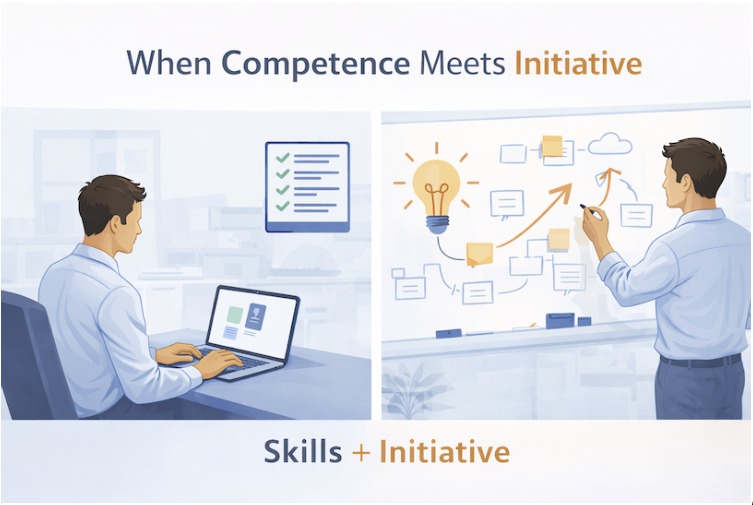
When competence is combined with initiative, the impact often becomes more visible. Work progresses more smoothly, problems are addressed earlier, and teams benefit from individuals who actively contribute beyond the immediate task.
From a technical standpoint, skills enable the work to be completed. But initiative often determines how far the work can progress.
Where Initiative Often Develops
Initiative does not always appear immediately when someone joins a new organization. Many professionals take time to understand the culture, decision-making processes, and expectations before acting more independently.
Previous work environments also play a role. Some individuals come from organizations where processes are highly structured and decisions are centralized, where employees are expected to follow direction rather than initiate change.
As professionals become more comfortable with their environment, initiative often grows alongside confidence and familiarity.
Looking Beyond Technical Ability
This is one reason many organizations increasingly look beyond technical qualifications during the hiring process. Behavioral indicators such as ownership, initiative, and problem-solving approach can be just as important as technical capability.
Interview conversations that explore how candidates handled ambiguity, took initiative, or approached challenges independently can provide valuable insight into how they may contribute once they join the team.
Hiring is not only about identifying who can perform the tasks, but also about understanding who will help move the work forward.
Building Initiative Over Time
Initiative is also shaped by the environment in which people work. Clear expectations, supportive leadership, and open communication often encourage employees to become more proactive.
When individuals feel trusted and understand the broader goals of their work, they are more likely to contribute ideas and take ownership of outcomes.
Final Thought
Competence may secure the opportunity, but initiative often amplifies the impact.
For organizations, the challenge lies in balancing both elements during hiring and development. For professionals, the opportunity is not only to demonstrate capability, but also the willingness to move work forward and create value beyond the task itself.