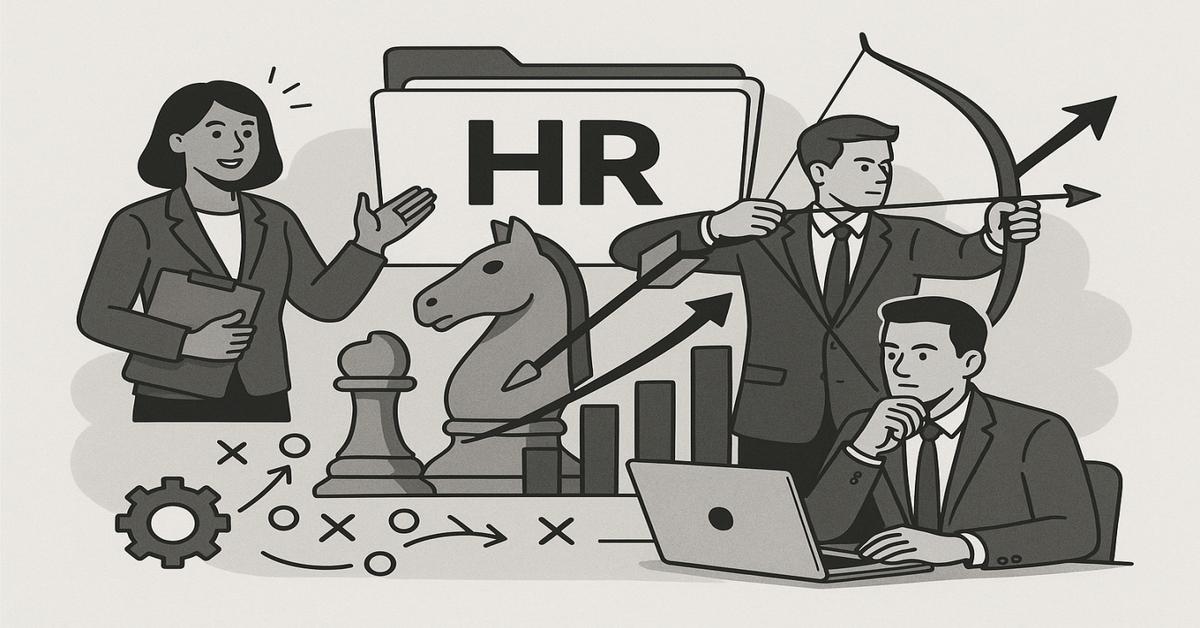
“HR is important, but it’s just a support function… right?”
This outdated mindset still lingers in boardrooms today. But in a business environment defined by transformation, disruption, and fierce competition, viewing HR as merely administrative is not only inaccurate — it’s risky.
In reality, HR — and particularly Talent Acquisition — sits at the intersection of business outcomes and organizational capability. Every hire is a lever. Pull it right, and you unlock growth. Pull it wrong, and you bleed time, profit, and morale.
It Always Starts with Talent
No product ships, no market is entered, no pivot succeeds — without the right people.
And while this sounds obvious, the way many organizations still approach hiring suggests otherwise. When leadership treats recruitment as a reactive, back-office task, they undercut their own strategy.
Great talent isn’t just “found.” It’s built, persuaded, and aligned. That’s why strategic Talent Acquisition isn’t about filling vacancies — it’s about building capability pipelines.
Hiring Is a Business Decision
Every hiring decision at the managerial level and above affects more than headcount. It affects:
- P&L performance
- Team productivity
- Customer experience
- Innovation velocity
- Cultural strength
One strategic hire can shift business performance. One poor hire can set it back by months.
Let’s ground this in a real example.
We once helped a client hire a new Head of Sales & Marketing. Instead of just maintaining the sales engine, this person redesigned the commission structure, aligning it more closely with margin-focused goals. Within 12 months, profit increased by 120%, and employee retention in the department rose by 10%.
That’s the power of hiring someone who’s not just qualified, but also strategically aligned.
Strategic HR vs Supportive HR
Here’s what strategic HR looks like in action:
| Supportive HR | Strategic HR |
|---|---|
| Fills roles | Anticipates and shapes future roles |
| Manages admin | Influences business decisions |
| Tracks hiring KPIs | Connects hiring to revenue impact |
| Relays candidate data | Brings market insights & talent strategy |
The Role of Headhunters: More Than CV Pushers
Not every company has an in-house TA function with strategic muscle. Not every hiring manager has the time or market objectivity to run a robust search.
That’s where headhunters come in — but not the transactional kind.
A true headhunter acts as a business partner who:
- Understands the organizational context behind the role
- Aligns expectations with real market conditions
- Surfaces friction in the hiring process
- Delivers candidates who are not just competent, but culturally and commercially aligned
We don’t just send CVs — we de-risk business decisions.
The Cost of a Bad Hire Isn’t Just Emotional
Let’s quantify it. A mis-hire at a key level can result in:
- Lost revenue from missed targets or failed launches
- High turnover costs (rehiring, retraining)
- Productivity loss across affected teams
- Delay in strategic execution
Hiring isn’t just an HR cost — it’s a profit and loss exposure. And if we agree that talent is a company’s competitive edge, then hiring is a frontline business issue.
From Filling Seats to Driving Strategy
Still calling HR a support function? Then perhaps the system isn’t broken — the mindset is.
When we elevate HR, especially Talent Acquisition, to the strategic table, we stop asking “Who can fill this role?” and start asking “Who can grow this business?”
Because in today’s world, the right hire isn’t just filling a gap. They’re building a legacy.